
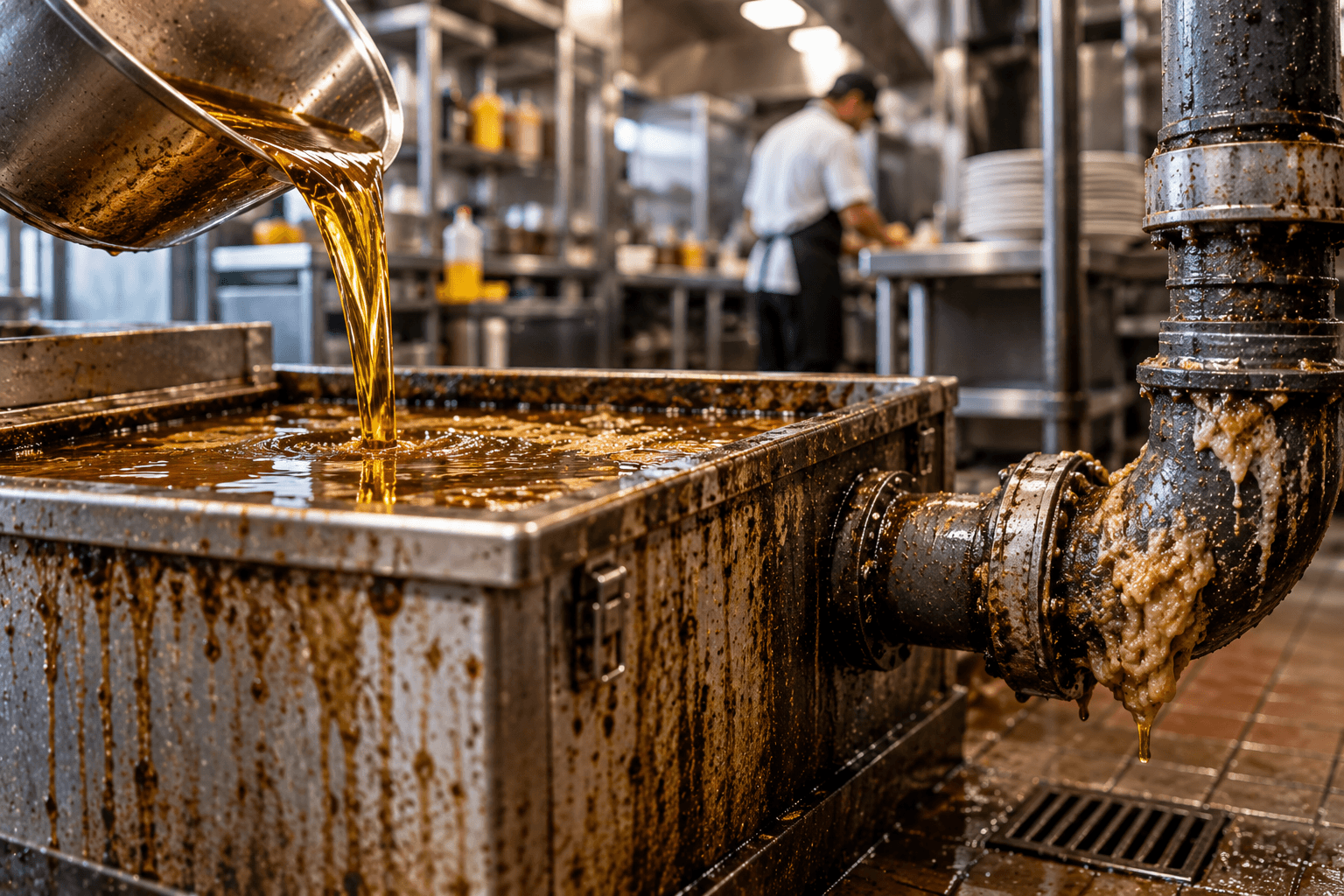
For restaurants, commercial kitchens and food-service businesses, used cooking oil and grease management may seem like a small part of daily operations. But when grease traps are neglected or used cooking oil isn’t properly stored and collected, the consequences can quickly become expensive, messy and disruptive.
A reliable grease and cooking oil management program isn’t simply about removing waste. It’s about protecting your kitchen, your employees, your plumbing and ultimately your business.
Clogged Drains and Plumbing Problems
Fats, oils and grease—often referred to as FOG—can create serious problems when they enter a drainage system.
Grease may leave the kitchen as a liquid, but as it cools, it can accumulate inside pipes and restrict wastewater flow. Over time, buildup can contribute to slow drains, blockages, backups and potentially expensive plumbing repairs.
A properly maintained grease trap or interceptor helps capture fats, oils and grease before they reach the drainage system. However, these systems need regular cleaning to continue working effectively.
Odours, Pests and Unpleasant Work Areas
Poorly maintained grease traps and overflowing cooking oil containers can quickly create unpleasant conditions.
Old grease and accumulated food particles can produce strong odours, while spills and improperly stored waste can attract insects, rodents and other pests. What begins as a maintenance issue can become a sanitation problem affecting employees, customers and neighbouring businesses.
Regular grease trap cleaning and scheduled used cooking oil collection can help keep kitchen and waste-storage areas cleaner and easier to manage.
Safety Risks for Employees
Used cooking oil can also create workplace hazards.
Oil spilled around fryers, storage containers or loading areas can create slippery surfaces. Moving containers of hot or heavy cooking oil manually can introduce additional risks for kitchen employees.
Having appropriate storage procedures and a professional collection service helps reduce unnecessary handling while keeping used oil contained until pickup.
Unexpected Downtime Can Get Expensive
One of the biggest hidden costs of poor grease management is disruption.
A blocked drain, overflowing grease interceptor or significant oil spill doesn’t necessarily happen at a convenient time. If it occurs during a busy dinner service, the resulting cleanup or repair can interfere with kitchen operations and potentially cost far more than routine preventative maintenance.
Preventative service is generally easier to plan for than an emergency.
A Better Approach to Cooking Oil and Grease
Good waste-oil management comes down to consistency: proper storage, dependable collection and routine grease trap and interceptor maintenance.
Eco Oil Canada provides commercial businesses with used cooking oil collection, grease trap and interceptor cleaning, and oil transfer and logistics solutions designed to make grease management simpler.
Instead of waiting until grease or cooking oil becomes a problem, businesses can take a proactive approach.
A cleaner grease trap, an organized oil-storage area and dependable collection may not be the most visible parts of running a restaurant—but when they’re properly managed, they help keep everything else running smoothly.
admin
June 5, 2019Dis lacinia pellentesque interdum tincidunt cubilia massa egestas primis ullamcorpert ultricies, ad molestie dui in feugiat lobortis erat vivamus hac condimentum est,
admin
June 5, 2019Mossis lacinia pellentesque interdum tincidunt cubilia massa egestas ullamcorpert ultricies, ad molestie dui in feugiat lobortis erat vivamus.
admin
June 5, 2019Binterdum tincidunt cubilia massa egestas ullamcorpert ultricies, ad molestie dui in feugiat lobortis erat vivamus.