
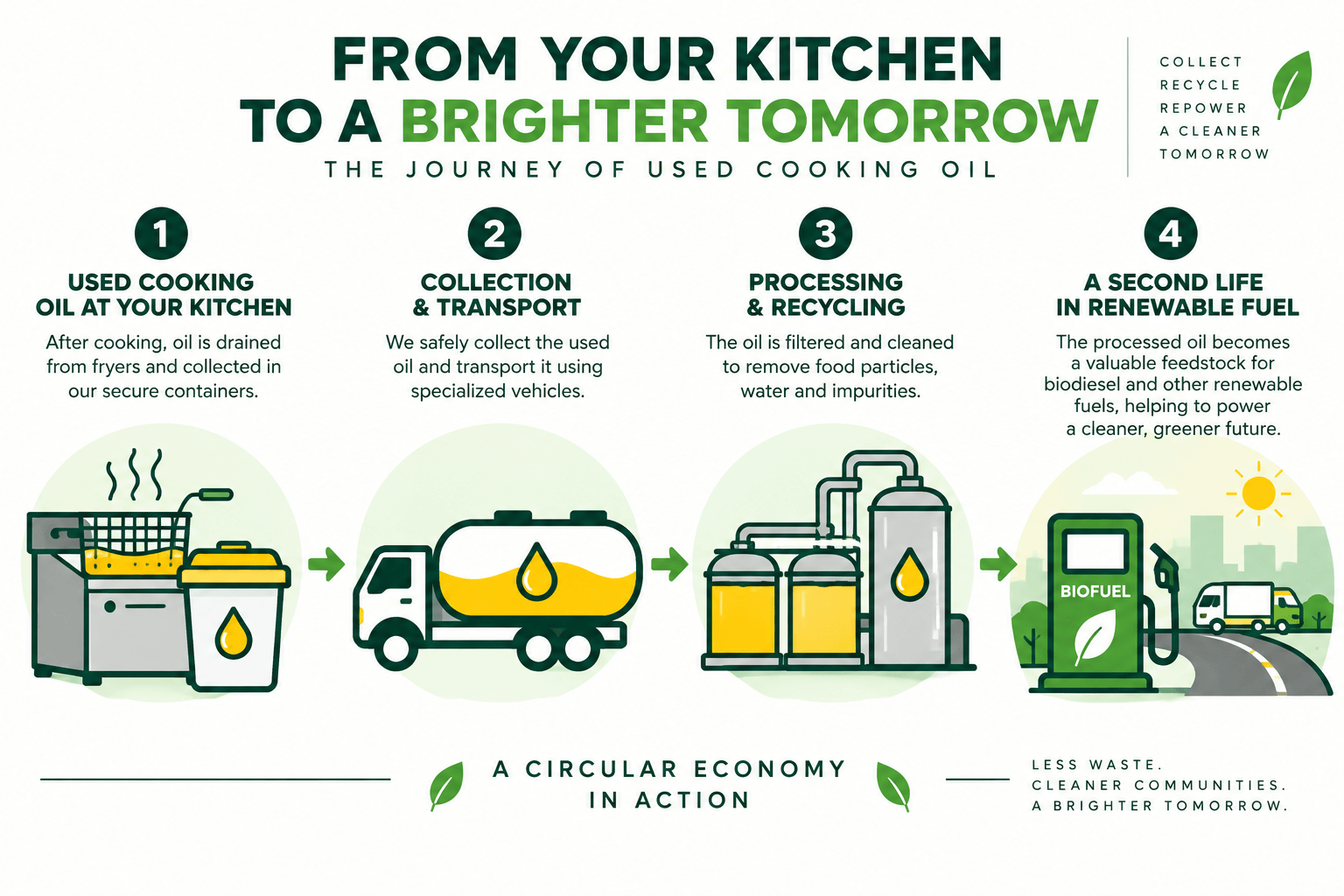
Every day, restaurants, commercial kitchens, hotels and food-service businesses produce significant amounts of used cooking oil. Once the fryer is drained, it may seem like that oil has reached the end of its useful life. In reality, with proper collection and recycling, it can be the beginning of an entirely new journey.
At Eco Oil Canada, we help businesses manage used cooking oil responsibly by collecting it and directing it into the recycling stream, where it can be processed and repurposed rather than simply treated as waste.
Step 1: Used Cooking Oil Collection
The process begins at your restaurant or commercial kitchen. After cooking oil has reached the end of its usable life, it is transferred into an appropriate storage container for collection.
Regularly scheduled used cooking oil pickup helps keep waste areas cleaner and more organized while reducing the problems associated with storing large quantities of waste oil on-site.
Eco Oil Canada provides collection solutions designed around the needs of commercial food-service operations, helping make used oil management a routine part of running the kitchen.
Step 2: Safe Transportation and Transfer
Once collected, the used cooking oil is transported for processing. Proper handling during this stage is important. Cooking oil can be messy, difficult to move and potentially damaging if it is spilled or improperly disposed of.
Professional oil transfer and logistics help ensure the material moves efficiently from the business that produced it to the facilities that can give it another purpose.
Step 3: Processing the Used Cooking Oil
Collected cooking oil typically contains food particles, water and other impurities. Before it can be reused, these contaminants need to be removed.
The oil can be filtered, separated and processed to create a cleaner recycled feedstock. Instead of viewing yesterday’s fryer oil as garbage, the recycling process treats it as a recoverable resource.
That’s an important distinction—and one of the reasons responsible cooking oil collection can make a meaningful difference.
Step 4: From Waste Oil to Renewable Fuel
Processed used cooking oil can potentially become a feedstock for the production of renewable fuels such as biodiesel.
That means oil once used to cook French fries, chicken or other foods can ultimately find a second life rather than being discarded.
It’s a practical example of the circular economy: recovering a material after its original use, processing it and returning it to the economy as a useful resource.
Turning Waste Into Opportunity
For restaurants and commercial kitchens, responsible used cooking oil recycling doesn’t need to be complicated.
Eco Oil Canada provides the collection, transfer and logistics solutions needed to move used cooking oil out of your operation and toward its next useful purpose.
The fryer may be where the journey starts—but it doesn’t have to be where the value of your cooking oil ends.
Have used cooking oil to manage? Contact Eco Oil Canada to learn more about our commercial cooking oil collection and recycling services.